
The Generational Cost of Family Estrangement
By Kim Giunta, LMHC
“Between what is said and not meant, and what is not said, much love is lost.” -Khalil Gibran
Family estrangement often develops through emotional immaturity, unresolved conflict, and communication break down over time. Family estrangement is often discussed in absolute terms. In today’s culture, people are frequently encouraged either to cut family members off entirely or to tolerate deeply unhealthy dynamics indefinitely. Yet in reality, most family relationships exist in a far more complicated emotional space.
Many families are imperfect, emotionally reactive, and at times dysfunctional. Parents may have unresolved trauma. Siblings may carry resentment, jealousy, or longstanding misunderstandings. Communication may be inconsistent, avoidant, defensive, or emotionally immature. And yet, despite these struggles, many families are still able to maintain some degree of connection.
Why? Because healthy relationships are not built on perfection. They are built on the ability to repair.
Most family estrangements do not begin with one catastrophic event. More often, they emerge slowly through years of unresolved hurt, emotional avoidance, rigid defenses, poor communication, and repeated failures to repair emotional injuries.
In emotionally immature family systems, conflict is often experienced as intolerable rather than repairable.
Instead of working through pain together, family members may withdraw emotionally, become defensive, avoid accountability, triangulate through other relatives, or sever communication entirely. Over time, distance replaces dialogue, and emotional cutoff becomes the primary way of managing distress.
Emotional Immaturity and the Breakdown of Family Relationships
Emotional immaturity can take many forms within families. Sometimes it appears as chronic defensiveness or an inability to tolerate criticism. Other times it appears through avoidance, silence, passive-aggressive behavior, emotional invalidation, or black-and-white thinking.
When families lack the ability to communicate openly and reflectively, even relatively manageable conflicts can evolve into permanent ruptures.
Emotionally immature communication often includes:
- refusing difficult conversations
- expecting others to “just know” what is wrong
- externalizing blame
- struggling with empathy or accountability
- using silence or withdrawal as punishment
- involving third parties instead of communicating directly
- interpreting boundaries as rejection
- seeing disagreement as betrayal
Over time, these patterns erode emotional safety within the family system.
In healthier families, people are often able to hold a balanced view of one another. They recognize both the strengths and limitations of family members while still maintaining connection, even if that connection requires boundaries, lower contact, or emotional distance at times.
But in more rigid systems, relationships can become polarized. Family members may begin viewing one another as entirely “good” or entirely “bad,” leaving little room for nuance, complexity, or repair.
Estrangement as Emotional Cutoff
Sometimes estrangement is necessary, particularly in situations involving severe abuse, exploitation, addiction, violence, or chronically destructive behavior. Not every relationship can or should be preserved at all costs.
However, many estrangements emerge not solely from cruelty, but from unresolved emotional injuries combined with poor communication and emotional rigidity.
Family systems theory often describes estrangement as emotional cutoff, an attempt to reduce emotional anxiety by creating physical or emotional distance. While distance may provide temporary relief, it does not always resolve the underlying grief, attachment wounds, or unresolved pain beneath the conflict.
In some cases, cutoff becomes easier than vulnerability.
Repair requires emotional maturity. It requires the ability to tolerate discomfort, acknowledge hurt, reflect on one’s own behavior, communicate directly, and remain emotionally present during conflict. These skills are often underdeveloped in families shaped by trauma, chronic invalidation, or emotionally avoidant relationship patterns.
The Generational Impact of Estrangement
One of the most overlooked aspects of family estrangement is the impact it has across generations.
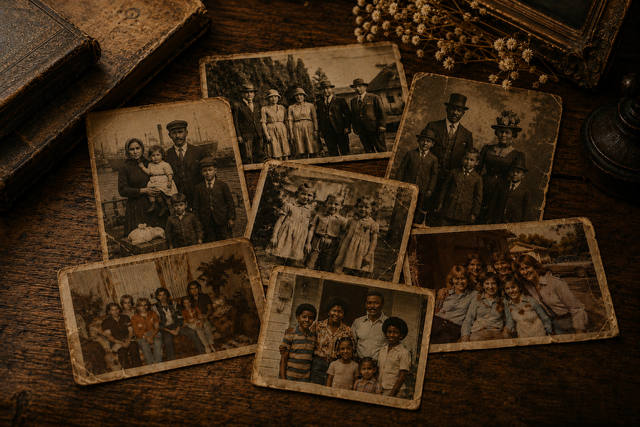
When families fracture, the effects rarely remain isolated to two individuals. Children may grow up disconnected from grandparents, cousins, aunts, uncles, or siblings. Family stories, traditions, cultural identity, and emotional continuity may gradually disappear over time.
In many families, unresolved resentment becomes inherited.
Children often absorb not only trauma itself, but also the communication patterns used to manage trauma. When emotional repair is absent in one generation, emotional cutoff can quietly become the relational template for the next.
Future generations may learn:
- avoidance instead of communication
- withdrawal instead of repair
- defensiveness instead of reflection
- emotional distancing instead of vulnerability
- polarization instead of nuance
Over time, entire family systems can become fragmented.
The emotional consequences of estrangement are often far more complicated than outsiders realize. Even when distance feels necessary, people may continue grieving the loss of connection, the loss of shared history, or the loss of the family they hoped could exist.
Estrangement can sometimes protect individuals from ongoing harm. But it can also carry profound emotional costs that deserve thoughtful acknowledgment rather than oversimplified narratives.
The Importance of Repair
Healthy families are not families without conflict. Every family experiences misunderstandings, disappointments, hurt feelings, and periods of emotional strain.
What differentiates healthier family systems is not perfection, but flexibility and repair.
Repair may involve:
- honest communication
- emotional accountability
- empathy
- healthier boundaries
- willingness to self-reflect
- tolerating difficult emotions without shutting down
- learning to hold both the good and painful aspects of relationships simultaneously
Family relationships are often imperfect, complicated, frustrating, and deeply meaningful all at once.
Maintaining connection does not mean accepting abuse or abandoning boundaries. Rather, it means recognizing that relationships often require emotional maturity, nuance, humility, and ongoing effort to sustain over time.
In a culture increasingly shaped by emotional polarization and disconnection, the ability to repair relationships may be becoming one of the most important relational skills we can pass on to future generations.
Final Thoughts
Estrangement is rarely as simple as people imagine. Behind many fractured family relationships lies a long history of unspoken pain, emotional immaturity, unresolved trauma, failed communication, and the inability to repair emotional wounds.
While some relationships genuinely require distance for safety and wellbeing, many others reflect a deeper cultural and relational struggle with vulnerability, accountability, and emotional resilience.
Healthy relationships are not built through perfection. They are built through communication, reflection, flexibility, and repair.
And perhaps one of the greatest gifts we can offer future generations is not the illusion of a perfect family, but the ability to remain connected through imperfection.